
Last updated November 4, 2026
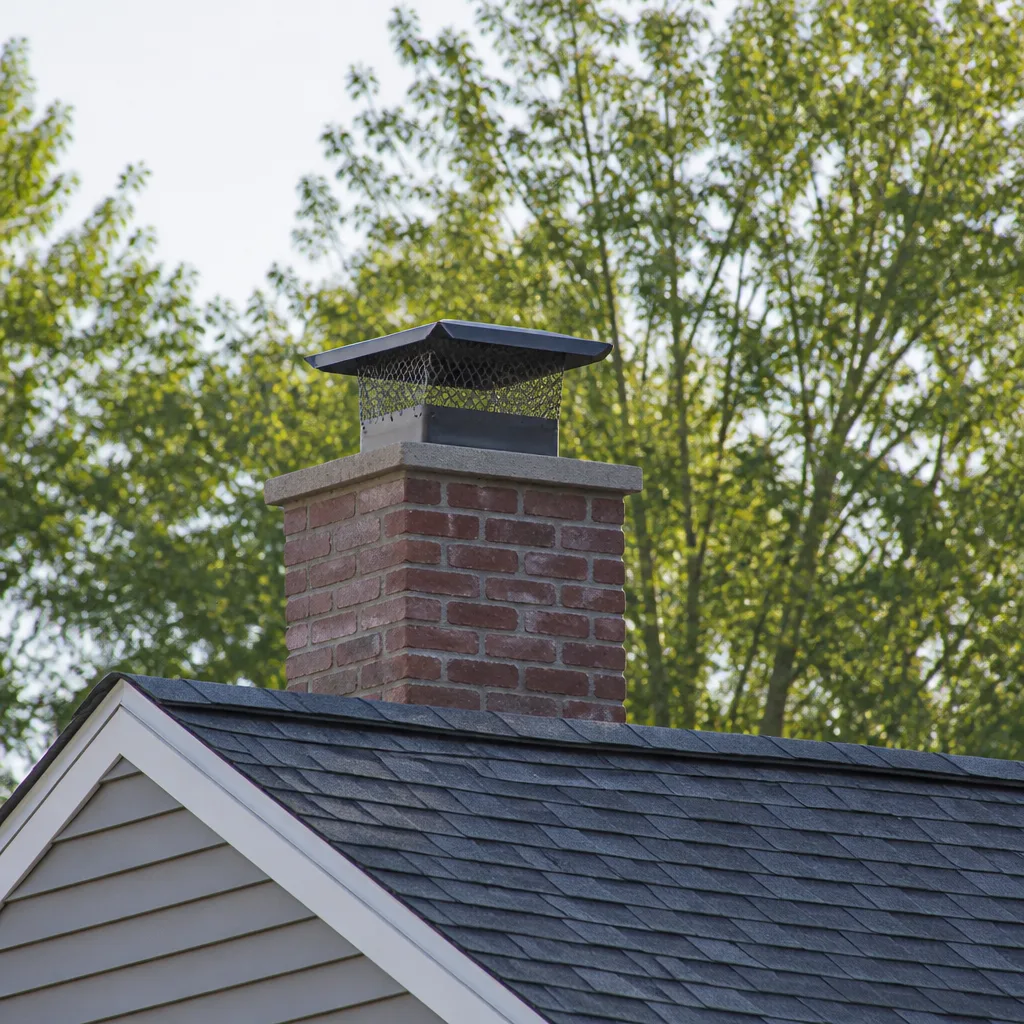 Sweep & inspection
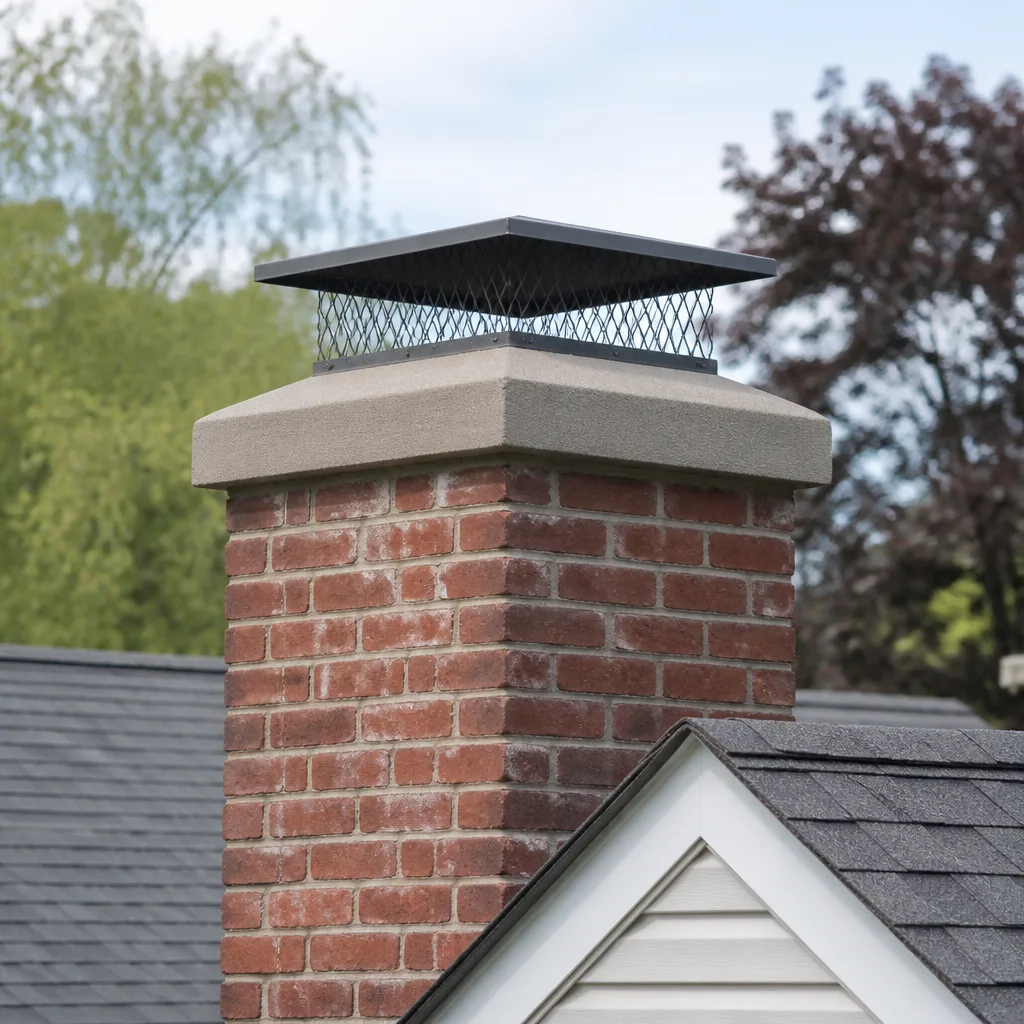 Caps & crowns
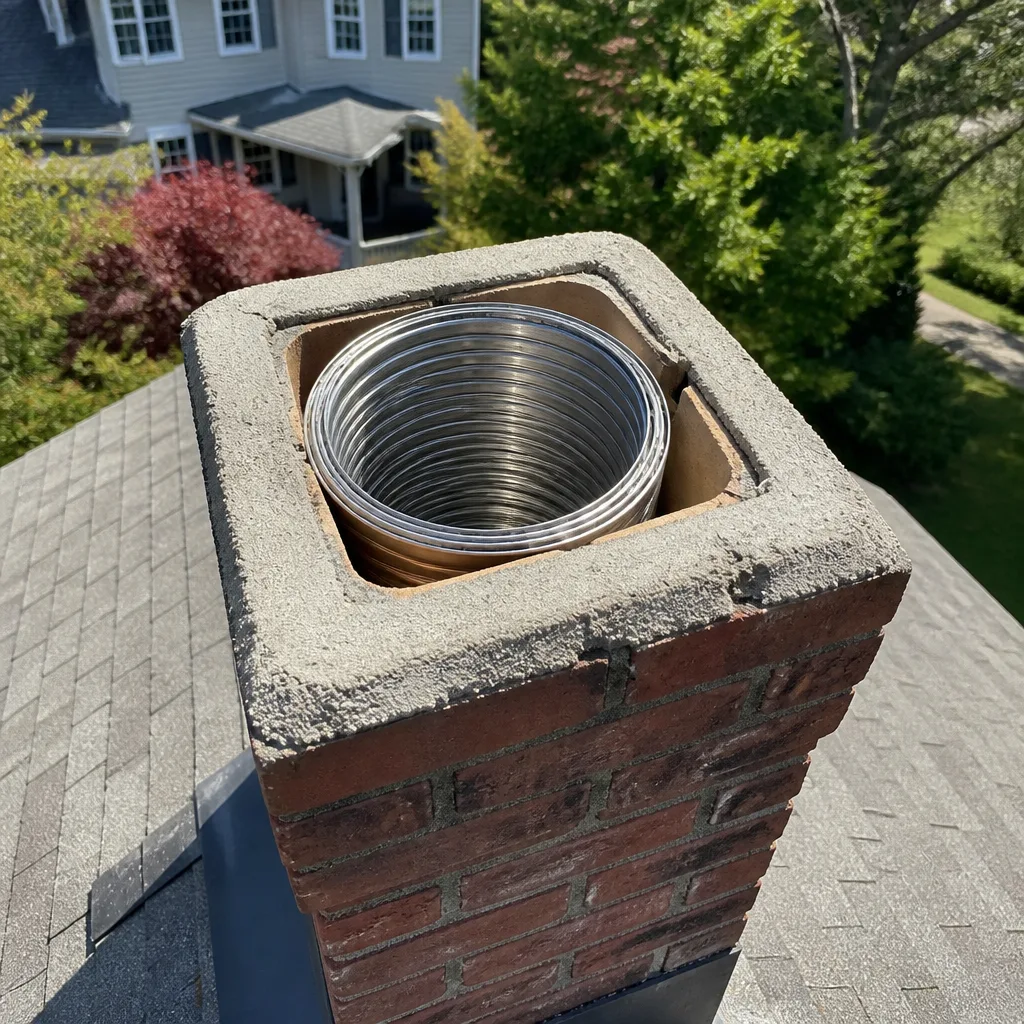 Flue relining
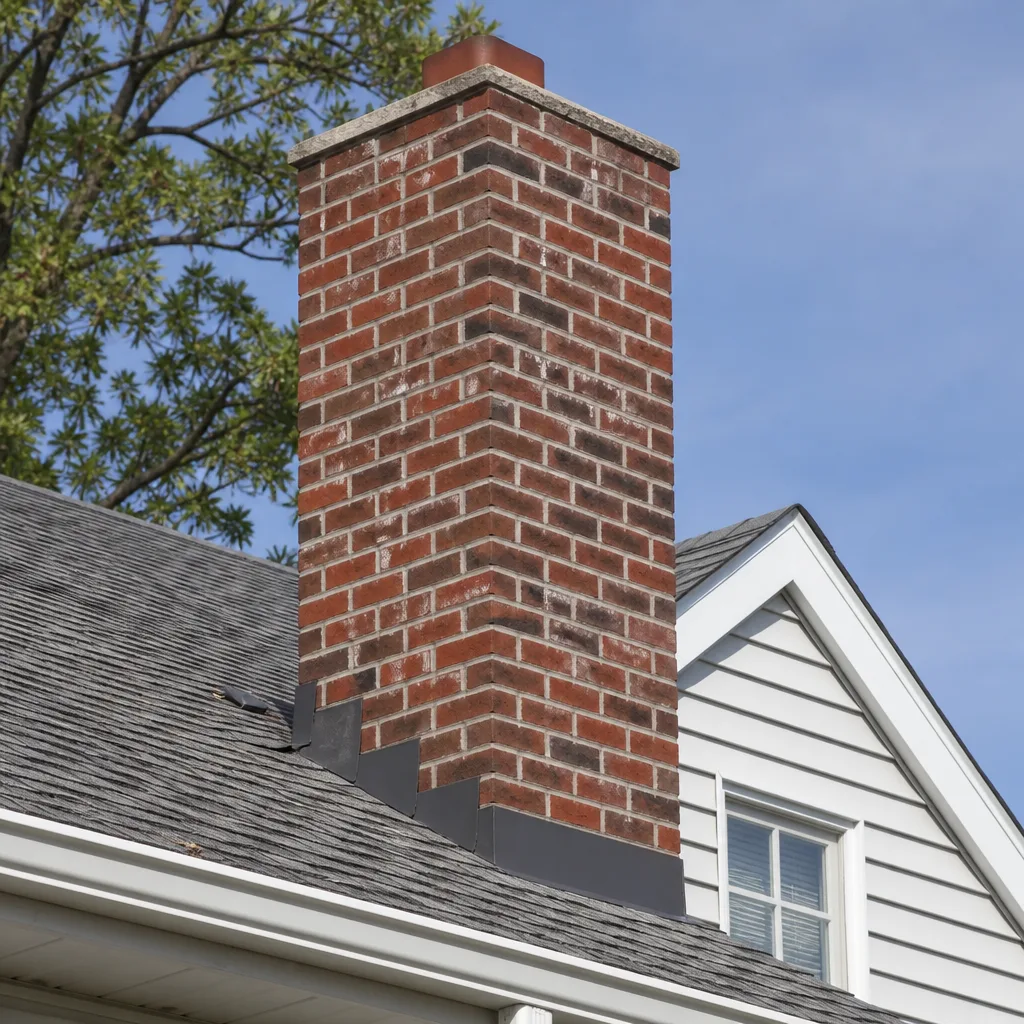 Masonry repair
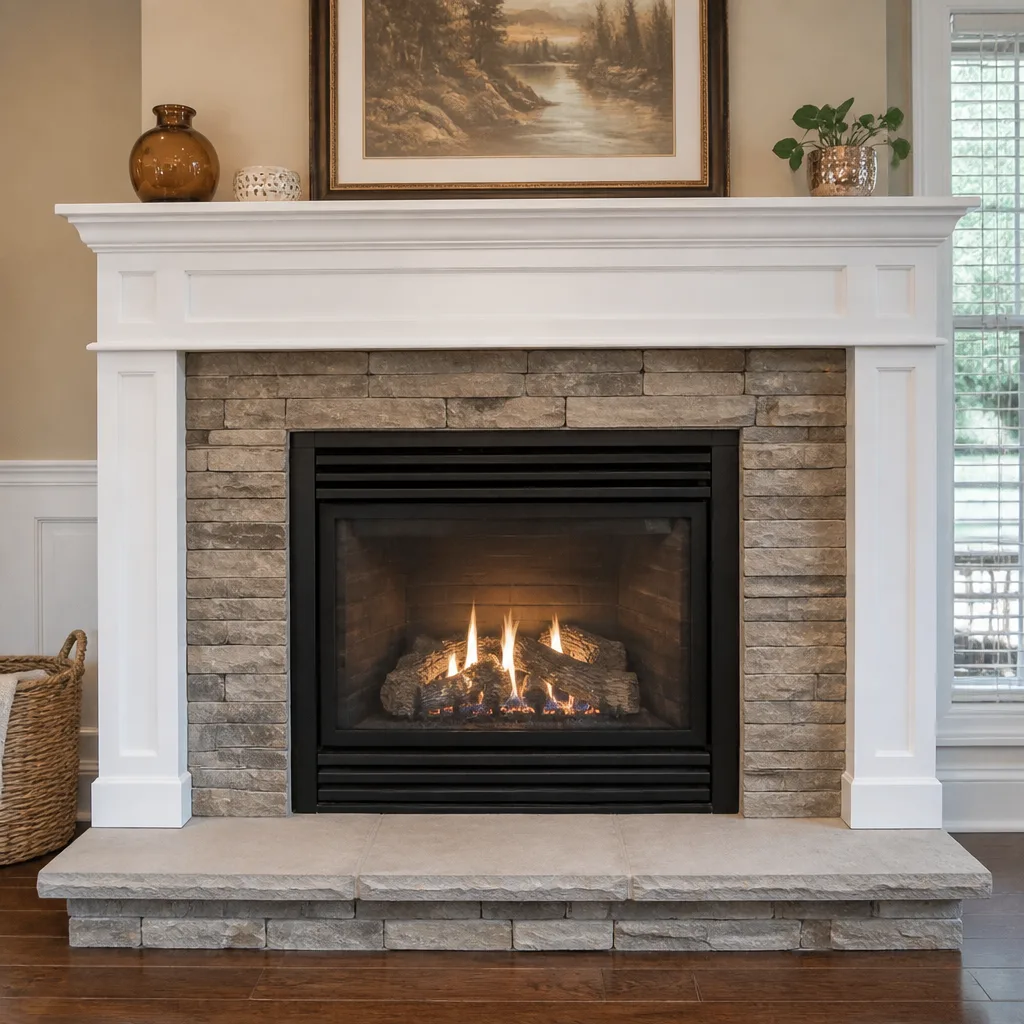 Gas fireplace service
Level 1 sweep and inspection to the NFPA 211 annual standard - flue, crown, cap, and flashing checked and photographed
Chimney sweep logs do not sweep chimneys. They loosen some creosote - which then falls where a brush and vacuum still have to collect it.
Chimney Sweep Maintenance Checklist for San Pedro Homeowners
Most chimney checklists read like a DMV form: check the box, sign the bottom, feel good for a year. That is not useful. A real maintenance checklist tells you what you are looking at, what it means when it looks wrong, and whether you can handle it with a brush or need a technician out the same week. San Pedro chimneys fail in predictable ways, and once you know the signs, you stop guessing. This guide pairs every inspection item with a plain-language description of failure, so when you walk through the checklist you know exactly what is normal, what is watch-and-wait, and what is a call-today situation.
Quick Answer
A useful chimney maintenance checklist for San Pedro homeowners covers four zones: the exterior masonry and crown, the flue interior, the damper, and the connected appliances including the dryer vent. A visual check takes about 20 minutes, should happen once before burning season and once after, and turns urgent when you see spalling brick, a cracked crown, creosote thicker than 1/8 inch, or a damper that will not seat. When in doubt, call Chimney Sweep San Pedro at (833) 576-1522 and we will walk you through what you are seeing.
Styles & brands we work with
- Sweep & inspection
- Caps & crowns
- Flue relining
- Masonry repair
- Gas fireplace service
Table of Contents
- Exterior Checklist: Crown, Brick, and Flashing
- Flue Interior: How Much Creosote Is Too Much
- Damper Function Test: Throat vs. Top-Mount
- Dryer Vent: The Chimney Work You Forgot About
- A Log Format for Insurance and Resale
- Seasonal Timing: When to Check in San Pedro
- Common Mistakes to Avoid
- When to Call a Professional
Exterior Checklist: Crown, Brick, and Flashing
Start outside. Walk around the chimney with a decent pair of binoculars or a phone camera on zoom. You are looking at three things: the concrete crown on top, the brick or stucco surface, and the metal flashing where the chimney meets the roof. San Pedro’s climate is mild, but the temperature still swings enough between cool nights and warm afternoons that concrete expands and contracts. Over years, micro-cracks open in the crown and widen.
A healthy crown sheds water away from the flue. A failing crown lets water run down the inside face of the chimney chase. If you see hairline cracks across the crown, mark it. If the crack is wider than a penny’s edge or the crown has missing chunks, that is a repair item, not a watch item. Water that gets into a cracked crown will stain interior walls and rust the damper assembly from the top down.
Brick spalling is next. Spalling means the face of the brick starts flaking or popping off, leaving rounded, pitted, or recessed surfaces. In San Pedro, brick can spall when the mortar joints degrade and the brick itself holds water. You may not see freeze damage here, but you will see thermal cycling wear. If more than a handful of bricks show face loss, the structural skin of the chimney is thinning. A tuckpointing pass can reset the joints and stop the progression, but if the bricks themselves are crumbling, the damaged units need to be cut out and replaced.
Flashing is the metal seal between chimney and roof. Look for lifted edges, rust streaking, or caulk that has pulled away from the brick. Flashing often fails quietly, and the first sign inside is a water stain on the ceiling near the fireplace. If the flashing is sound but the caulk has dried, a fresh polyurethane sealant can buy time. If the flashing metal is corroded or split, it needs replacement.
Flue Interior: How Much Creosote Is Too Much
Creosote is the residue wood smoke leaves behind. It forms in three stages: a dusty soot, a flaky tar, and a hard glaze that looks like baked-on molasses. The stage matters because it changes how the flue should be cleaned and how urgent the work is.
The depth that matters is 1/8 inch. Below that, the flue is still in maintenance territory. At 1/8 inch or more, creosote becomes a fire hazard and the chimney should be swept before the next burn. Glazed creosote is harder to remove than flaky creosote, often requiring a rotary head with metal chains rather than a standard brush. If you run a fireplace poker or scraper along the flue wall and the deposit comes off in shiny sheets, that is stage two or three.
How to check without climbing: open the damper, shine a bright flashlight up the flue, and use a small mirror angled into the opening. You are looking for any deposit that is obviously layered rather than a light dusting. If you see peeling black scale, call for a sweep. If you have a gas insert, do not wait for creosote, which it will not produce. Instead look for white mineral crust on the vent liner, the sign of condensation eating away at the metal. Gas flues need annual inspection for corrosion and proper draft, not just a dusting.
San Pedro homes that burn wood during the mild winter often have part-time fireplaces. That can be worse than a heavily used one, because intermittent fires burn cooler and produce more condensation and early-stage creosote. A chimney sweep after a season of occasional fires should still happen. If you burned more than a cord of wood, plan on one sweep that year. If you burned less, an inspection still matters.
Damper Function Test: Throat vs. Top-Mount
The damper has one job: seat tightly when closed and open fully when the fire is lit. Most San Pedro homes have either a throat damper, which sits just above the firebox and resembles a metal plate on a lever, or a top-mount damper, which caps the top of the flue and operates with a cable down the chimney.
For a throat damper, open and close it a few times. It should move with firm resistance, not flop. Look for gaps around the plate when closed. Shine a flashlight at the seam from below; if light leaks around the frame, the damper is not sealing. Warped dampers come from heat exposure and repeated banging open and shut. A warped plate will never seat fully, and that means conditioned air escapes the house all year.
A top-mount damper is checked from outside. The cable should have tension and the cap should drop snugly onto the flue opening. If the cable is slack or the cap sits askew, the mechanism has either stretched or the spring has failed. The benefit of a top-mount is that it also blocks rain and keeps birds out when it seals. When it fails, it fails in the open position, which is a draft and moisture problem.
One note on safety: a damper that fails in the fully closed position while you are burning is dangerous. It backs combustion gases into the room. Test the open position every time you light a fire. If the damper ever will not open, do not burn. A qualified technician should inspect the assembly before the next use.
Dryer Vent: The Chimney Work You Forgot About
Dryer vents are chimney work too. A dryer pushes lint-laden, humid air through a duct that most homeowners never see. Lint accumulates on the inside walls until airflow drops, the dryer overheats, and the lint itself becomes fuel. Thousands of house fires start in dryer vents every year, and nearly all of them are maintenance failures.
Start at the exterior cap. Walk outside and find the vent termination. It should open when the dryer runs and close when it stops. If the flap is stuck open, lint and pests get in. If it is stuck closed, the dryer works against a blocked exit. Clean the cage with a soft brush and remove any lint you can reach by hand. Then check the inside run. The maximum effective dryer vent length is 25 feet, minus 5 feet for every 90-degree bend. If your vent runs through a crawl space, attic, or wall cavity for more than that, the lint is settling somewhere. The appliance itself cannot push air far enough.
Inside, pull the dryer away from the wall once a year and check the transition duct, the flexible foil or aluminum connector behind the machine. Disconnect it and look inside. If the lint layer is thick enough to see a defined ridge line, it is restricting flow. For the full-service version of this, dryer vent cleaning uses a rotary brush and a vacuum at the wall exit. That is the only way to clear a long run completely.
A Log Format for Insurance and Resale
Most homeowners have no record of what was done to their chimney or when. When a home inspector asks for the last sweep date, the answer is usually a guess. A one-page log solves that and gives you documentation if you ever need to make an insurance claim or sell the house.
Keep the log near the fireplace or in a home maintenance binder. Each entry needs six fields:
- Date of service or inspection
- Who did the work (you or a company name)
- What was found, in plain language
- What was done: swept, repaired, replaced, resurfaced
- Creosote depth, if measured
- Next recommended service date
Here is what a filled line looks like:
10/14 – Chimney Sweep San Pedro – Creosote flaky, approximately 3/16 inch in upper flue. Swept with rotary head. Crown has hairline crack, will monitor. Next check: before next burn season.
That is enough information for a buyer, an adjuster, or your own memory. It also forces the habit of looking. A log turns a checklist into a maintenance history, and a history is what protects you when something fails. The same log works for the dryer vent; note the vent length and the condition of the cap.
Seasonal Timing: When to Check in San Pedro
San Pedro does not have a hard winter, which means the chimney gets used in short bursts, not long heating seasons. That changes the rhythm. The ideal window for a pre-season inspection is late summer, before the first evening fires start. The second useful window is spring, after the last burn, so the creosote does not sit in the flue through the damp season.
Late summer checking allows time for repairs before burning weather arrives. Crown work and masonry need dry conditions for sealants to cure properly. If you find a cracked crown in October, the repair is still doable, but you are now compressing the timeline. Spring checking is about storage. Creosote is hygroscopic, meaning it pulls moisture from the air. Leave a heavy creosote layer through the humid months and it softens, then bakes on again the next burn. Sweeping after the season stops that cycle.
For dryer vents, the best interval is annual, tied to any date you will remember. The vent does not care about seasons, but lint builds steadily and the summer is when dryers often run more from beach towels and heavier use.
Common Mistakes to Avoid
- Waiting until the first cold evening to open the damper. Problems discovered then are already in your burning window. Check the chimney in warm weather so repairs happen without pressure.
- Assuming a gas fireplace needs no maintenance. Gas inserts do not make creosote, but they make condensation, corrosion, and spider nests in the burner ports. An annual check is still the rule.
- Cleaning the dryer lint trap and calling it done. The trap catches maybe a third of the lint. The rest moves into the duct. Cleaning the trap weekly does not clean the vent.
- Sealing cracks with interior latex caulk from the hardware store. That is the wrong material for a chimney crown. It fails in months. Proper crown repair uses a flexible elastomeric sealant or a full crown resurface.
- Ignoring a warped throat damper because the fireplace is rarely used. A leaky damper costs you conditioned air every day of the year, not just when you burn. It also lets flue odors sink into the room.
- Pushing a dryer against the wall and kinking the transition duct. A kinked duct chokes airflow immediately. Give the machine room to breathe and check the duct shape after every move.
- Using the fireplace once a year and skipping sweep years. Intermittent burns create more cool-fire creosote condensation, not less. The rule is not based on how often you burn, but on what deposits are present.
When to Call a Professional
Call a professional when the inspection turns up something you would not want to explain to a home inspector or adjuster. That means: creosote approaching 1/8 inch, a damper that will not seat or will not open, a cracked or pitted crown, spalling brick, corroded flashing, or a dryer vent that runs longer than 25 feet and has never been brushed. You can watch a crack and monitor creosote for a few months, but you cannot fix those things safely with a ladder and a hardware-store brush. And you should never work on a hot or structurally questionable flue without the right training. San Pedro homeowners call us for a reason: we deliver the full sweep, inspection, and repair in one visit, and we are not finished until the log line is written. Chimney Sweep San Pedro offers free estimates in San Pedro. Call (833) 576-1522.
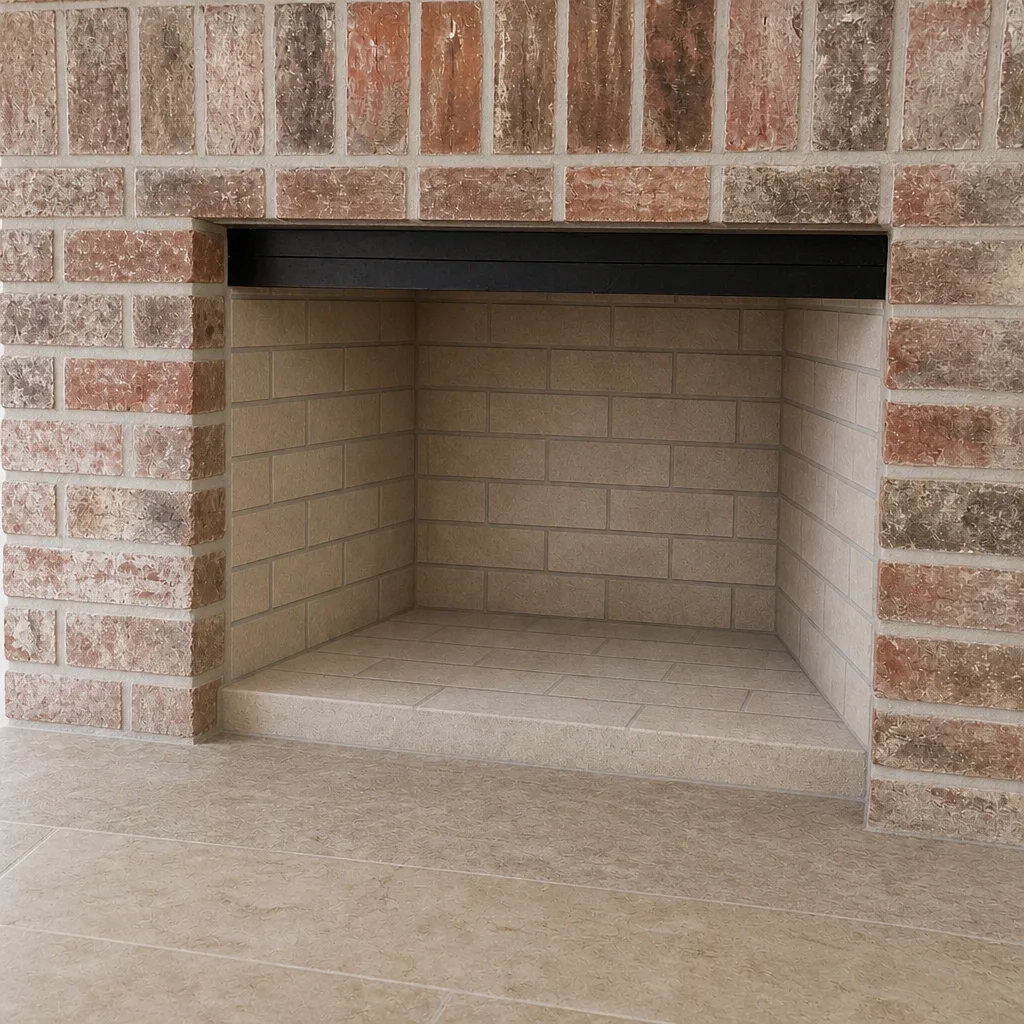
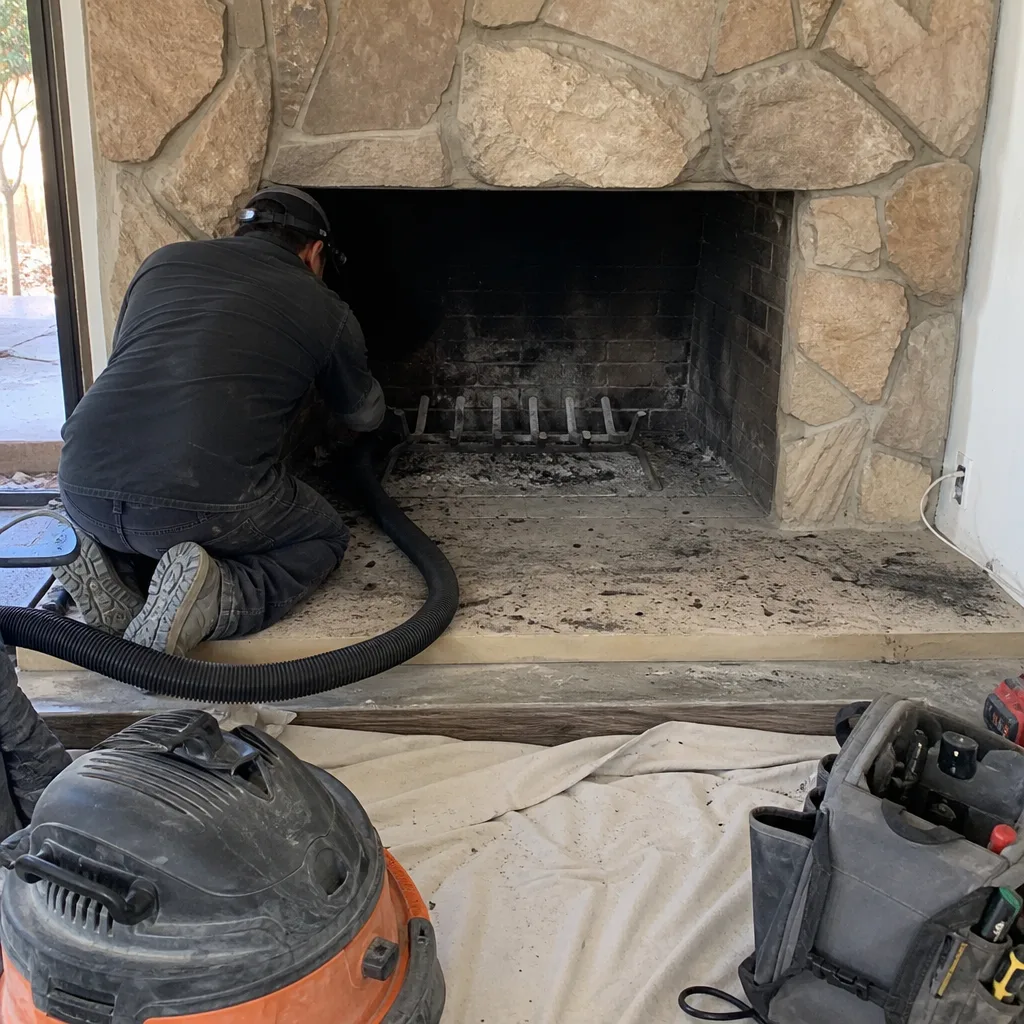
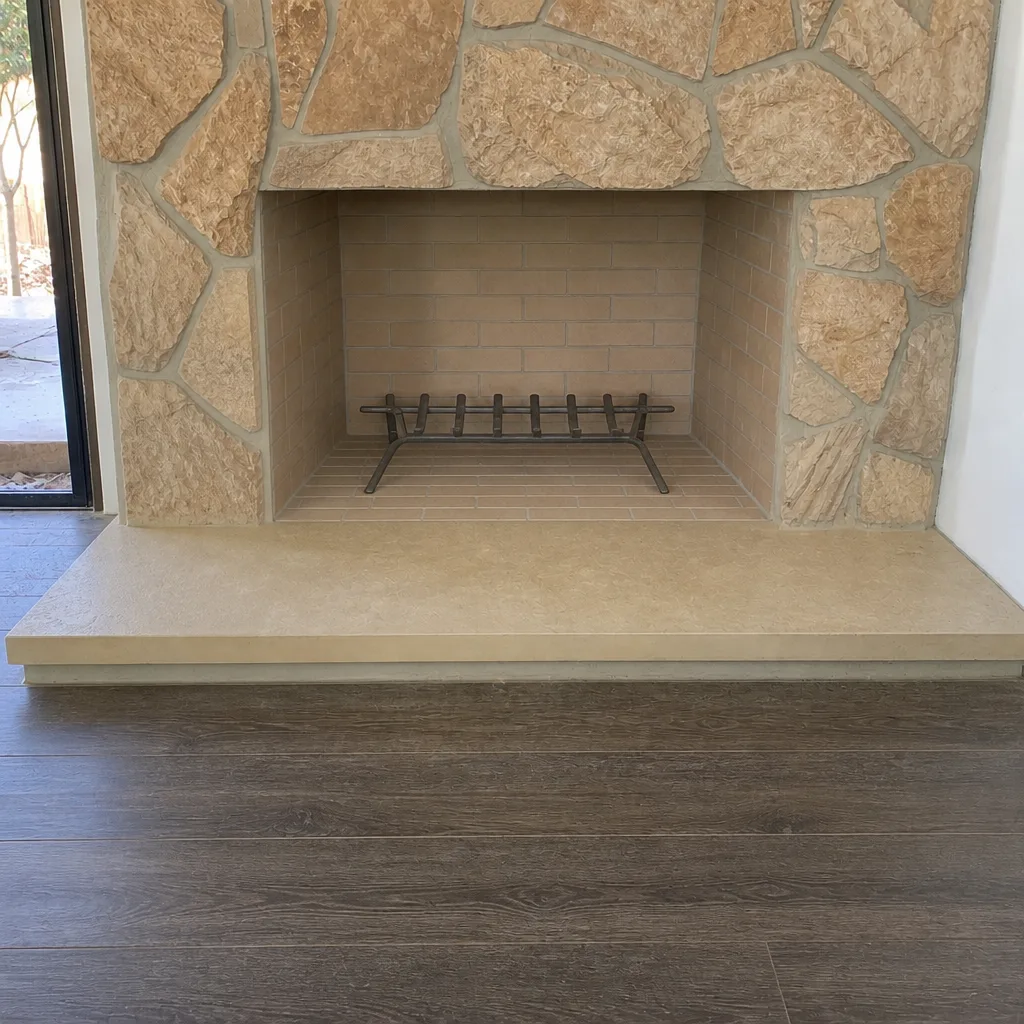
See the difference
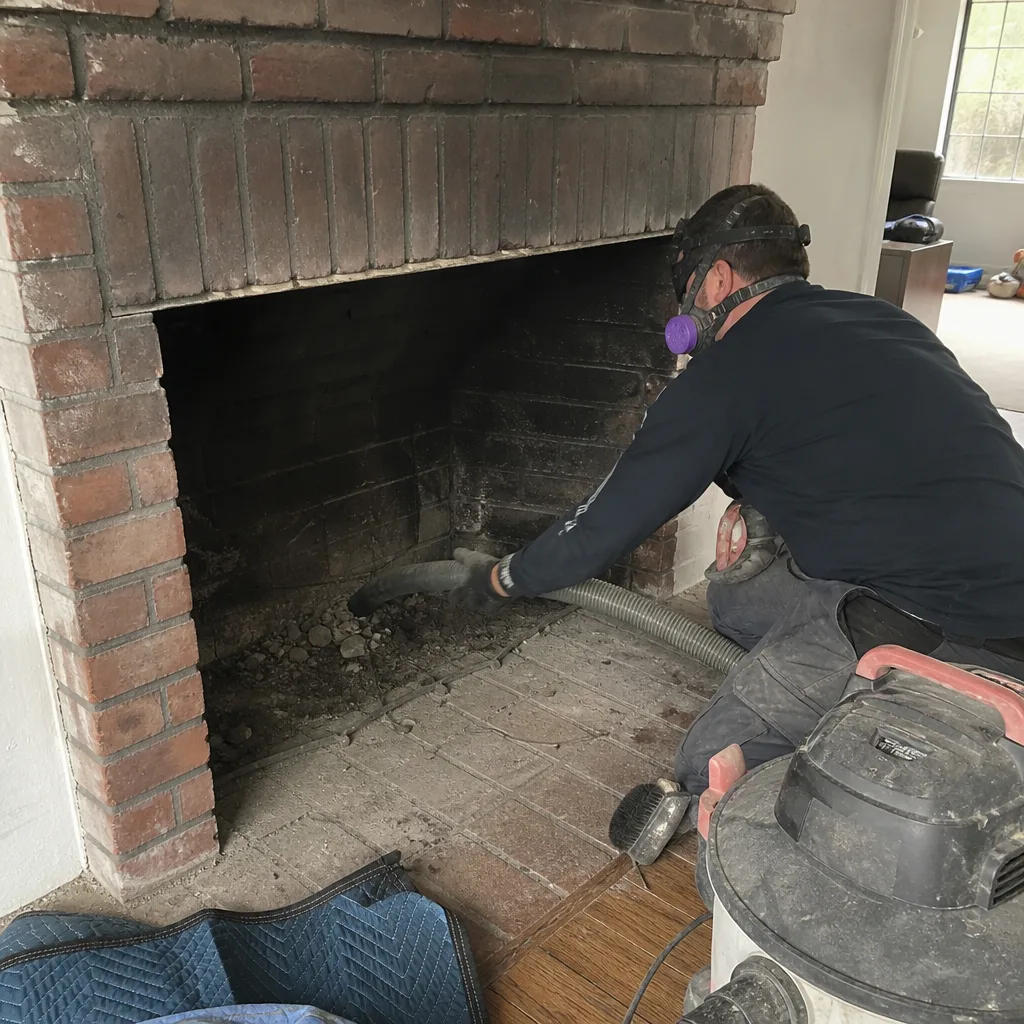 Before
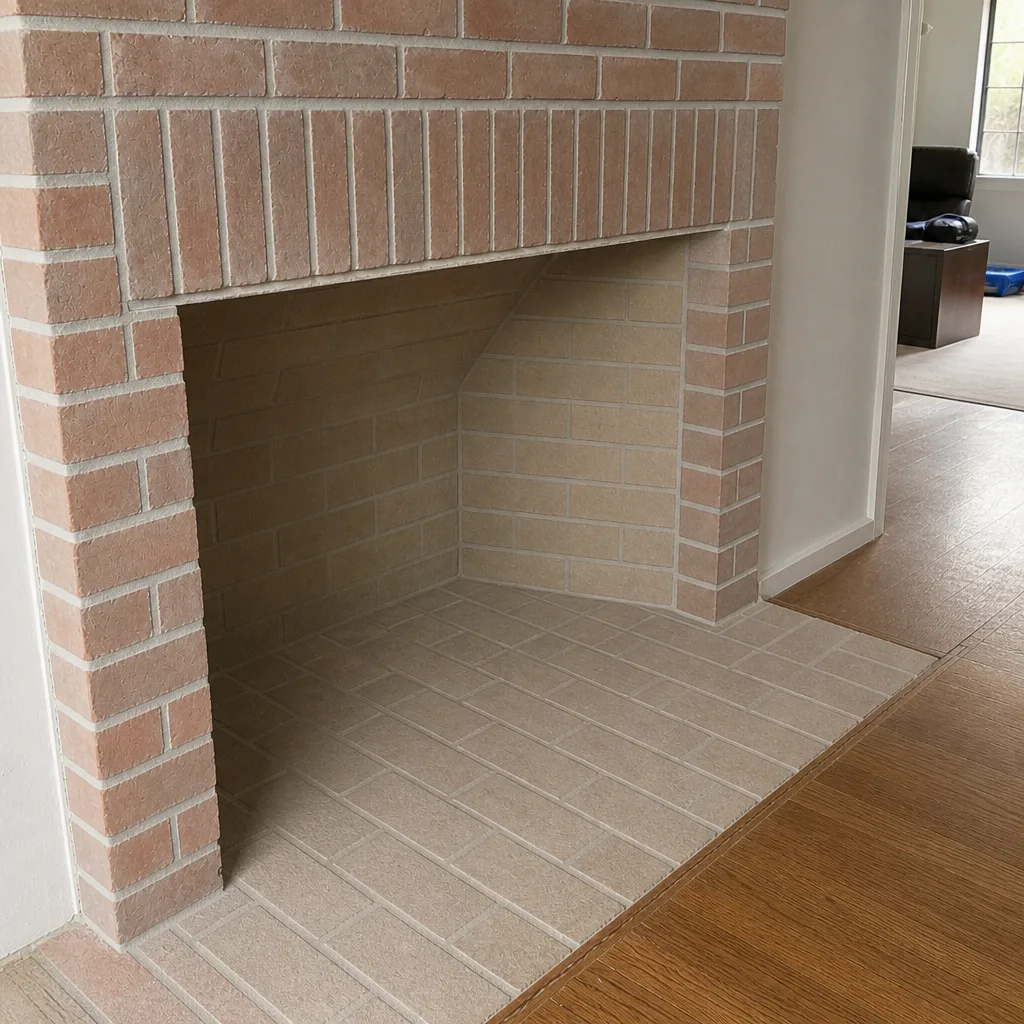 After
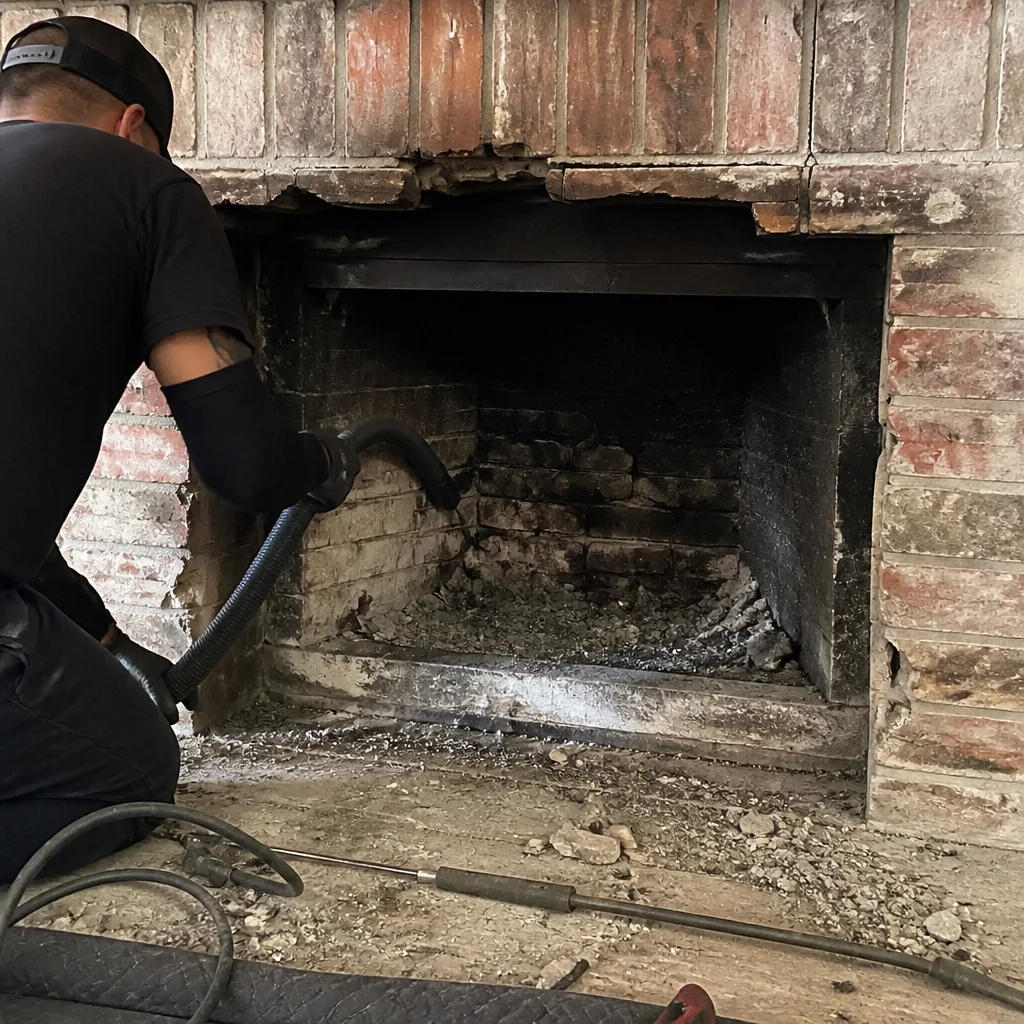 Before
 After
 Before
 After
Frequently Asked Questions
Once a year is the safe answer for any wood-burning fireplace, and that timing does not change because San Pedro winters are mild. Intermittent, low-heat fires produce creosote condensation at a rate that surprises people. A visual inspection can tell you whether the annual sweep can be skipped for a year. Gas fireplaces need an annual inspection but not a sweep for creosote. Call (833) 576-1522 for a free estimate on a sweep and inspection.
Creosote looks like a fine black dust at its earliest stage, then like black flakes that peel like chipped paint, then like a shiny, hard glaze. It becomes a fire hazard when the deposit reaches about 1/8 inch thick, and glazed creosote is dangerous at even moderate depth because it burns hot and stubborn. If you see any peeling or glazed material, schedule a sweep. Call (833) 576-1522 for a professional assessment.
A basic chimney sweep in San Pedro typically costs between $150 and $300 depending on flue height and creosote condition, with glazed creosote and rotary-head work at the higher end. If the inspection reveals crown damage, a new damper, or a liner issue, those are quoted separately. Estimates are free, and the written estimate sets the final price. Call (833) 576-1522 for an exact quote.
You need a new liner only when the existing flue has cracked tiles, missing mortar joints, or corrosion that compromises the exhaust path. The way to verify is a camera inspection, which we include as part of any chimney sweep where the flue condition is in question. We do not recommend a liner without showing you the footage. In some cases a HeatShield ceramic resurfacing treatment can extend the life of a damaged flue without a full reline, but a fractured clay liner is a real repair need, not an upsell. Call (833) 576-1522 and we will show you what the camera sees.
Creosote accumulates, the flue diameter effectively shrinks, and the chimney drafts worse. The fire burns cooler and smokier, which adds creosote faster. Eventually the layers become a fire load, and in the meantime the damper and flue metal are sitting in acidic residue that corrodes them. The safest answer is to catch it before the cycle compounds. Call (833) 576-1522 to get a look inside your flue.
Most sweeps are finished in one to two hours, including the inspection and the photo report. Same-day service is often possible when the phone call comes in early. We answer 24/7, and fast dispatch runs from 7am to 7pm, Sunday through Friday. Call (833) 576-1522 and we will tell you what openings are available.
The Bottom Line
A chimney maintenance checklist only works if you know what failure looks like. Now you do. Check the crown for cracks, the brick for spalling, the flashing for rust and lift. Look inside the flue for creosote depth and shine a light on the damper’s seal. Add the dryer vent to the same visit, because lint is fire fuel the same way creosote is. Keep the log. Write it down every time. The goal is not perfection; it is a record that catches problems before they catch you. One call to Chimney Sweep San Pedro at (833) 576-1522 gets you an inspection, a sweep if needed, and a written log line you can show a buyer or an adjuster. We answer 24/7. Fast dispatch from 7am to 7pm, Sunday through Friday.
Written by the team at Chimney Sweep San Pedro, serving San Pedro since 2016.